Short answer: there is no single kind of “funny”: it depends on the child listening. Watch what makes your child laugh, then look for these four things:
- Ordinary situations that go slightly wrong: baking cookies, a picnic, a simple plan that collapses.
- Language that sounds natural when read aloud, with rhythm rather than a full performance.
- A story you can finish in about ten minutes on a tiring evening.
- Moments worth reading again. If they want the funny part again, read it again.
Why I still read aloud
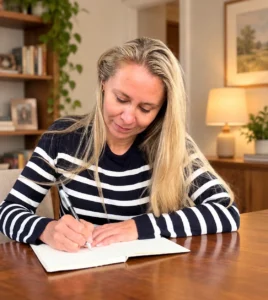
Some of my sweetest childhood memories are of my grandmother telling me stories every night.
I do not remember whether those stories were considered important or educational. I remember lying there, listening to her voice, knowing that this was our time together.
Years later, I created a similar bedtime routine with my own children. I continued reading to them even when they were nine, an age when some people assume children are too old to be read to.
My younger son also liked being read to at other times. When he came home exhausted after practice or a busy day, he would sometimes lie down on the couch and ask me to read one of his favorite books. He did not need an activity, a lesson, or a conversation about reading. He needed to rest while someone he loved told him a story.
Funny is not the same for every child
My children have very different senses of humor.
My daughter enjoyed longer stories about emotions and friendship. She loved Winnie-the-Pooh, and as she grew older, her humor became dry and more sarcastic.
My son prefers something much more direct. He loves slapstick, mischief, and ordinary situations that become completely ridiculous. Two of his favorites are the Little Nicholas stories and Bzubzi.
That difference taught me something important: there is no single kind of “funny children’s book.” The right story depends on the child listening.
One child may laugh at a clever remark that passes unnoticed by everyone else. Another may be delighted when an alien presses the wrong button, a simple plan collapses, or an entire picnic falls out of the sky. Neither kind of humor is better. The important thing is recognizing what makes your particular child wait for the next page.
7 things I have learned about choosing a funny read-aloud
1. Start with your child’s sense of humor, not your own
Adults and children do not always find the same things funny. Even children in the same family can respond completely differently to one story. My daughter appreciates subtle, dry humor. My son wants to see the consequences of a very bad idea.
Instead of beginning with a list of books every child is supposed to love, I watch the child in front of me. Do they laugh at:
- wordplay?
- mischief?
- exaggeration?
- awkward situations?
- characters who misunderstand one another?
- a disaster they can see coming long before the character does?
Their reaction is more useful than any age-based recommendation.
2. The funniest stories often begin with something ordinary
The humor my son enjoys most does not require a fantastical world or a complicated plot. It often begins with an ordinary situation: going to school, baking cookies, having a picnic, or trying to understand a simple human habit. Then somebody gets it slightly wrong.
That is one of the reasons the Little Nicholas stories work so well for him. Everyday life is seen through a child’s logic, and the gap between what the characters believe and what is actually happening becomes very funny.
Bzubzi works in a similar way. He looks at ordinary life from the perspective of an alien who is curious, confident, and usually missing one crucial piece of information. Making cookies should be simple. Having a picnic should be simple. With Bzubzi involved, neither remains simple for very long.
3. The language has to belong to the child
Some children’s books contain beautiful writing but are difficult to read aloud to an actual child. The sentences are long. The descriptions interrupt the action. The vocabulary belongs more naturally to an adult than to the child listening.
I do not think every word has to be simple, and children can certainly understand language that stretches them a little. But if I have to keep stopping to explain the sentences, the story loses its rhythm.
When choosing a read-aloud, I look for language that sounds natural when spoken. I want the dialogue to be clear, the action easy to follow, and the child’s attention to remain on what is happening, not on trying to decode the author’s phrasing. Beautiful language should bring a child closer to the story, not stand between them and it.
4. Reading aloud needs rhythm more than theater
I change my voice slightly for different characters so my children can follow who is speaking. But I do not turn every book into a full performance.
What matters more to me is finding the rhythm of the story. Some sentences need to move quickly. Some need a pause before the final word. Some jokes work because the character delivers an absurd statement with complete seriousness.
My children usually listen without interrupting. I try not to stop the story unnecessarily or turn every page into a question. Sometimes we talk about what we have read afterward, but not every story needs to become a discussion. Sometimes the best thing I can do is let the story carry us.
5. On a tiring evening, length matters
There are evenings when I am happy to read for a long time. There are also evenings when everyone is exhausted and I am looking for something we can finish in about ten minutes.
On those nights, I make my child promise that we are reading only one story. This agreement is not always respected. There is often an immediate: “One more, Mommy.”
But a short, complete story gives us a realistic chance of reaching the ending without rushing, negotiating, or stopping halfway through the interesting part. Short does not have to mean empty. A ten-minute story can still give us a memorable character, a proper adventure, and something to laugh about together.
6. If they want the funny part again, read it again
One of my son’s favorite moments in the Bzubzi stories happens during a picnic. Bzubzi uses one of his devices to protect the food. The plan goes wrong, and all the food comes falling back down.
The first time I read that scene, my son laughed out loud. Then he asked me to read it again. And again. He knew exactly what was coming. That did not make it less funny. Anticipating the moment became part of the joke.
As adults, we sometimes become impatient with repetition because we already know the story. Children often love repetition for precisely that reason. They can wait for the favorite line, picture, or disaster, and enjoy it arriving exactly as expected.
7. The laughter is important, but the memory matters more
Of course, I want my children to understand that books and reading are important. By reading to them consistently, I hope I am helping to build a habit that will stay with them. I hope that hearing stories now will make it easier for them to reach for books themselves later.
But that is not the only reason I read aloud. When I remember my grandmother telling me stories, I remember feeling safe, close to her, and completely certain that this time belonged to us.
I hope my children will remember something similar. Perhaps they will remember a particular book. Perhaps they will remember asking for one more story when we had already agreed there would only be one. Perhaps they will remember me changing the voices just enough to make the dialogue clear. More than anything, I hope they remember that for those few minutes, nothing else was more important than being together.
The best funny read-aloud is the one that works in your home
It does not have to teach an important lesson. It does not have to appear on every recommended reading list. It does not even have to make every child laugh. My own children are proof that humor is personal.
It only needs to catch the attention of the child beside you, and give the two of you a reason to stay for the next page.
Meet an alien who is extremely confident and not always correct
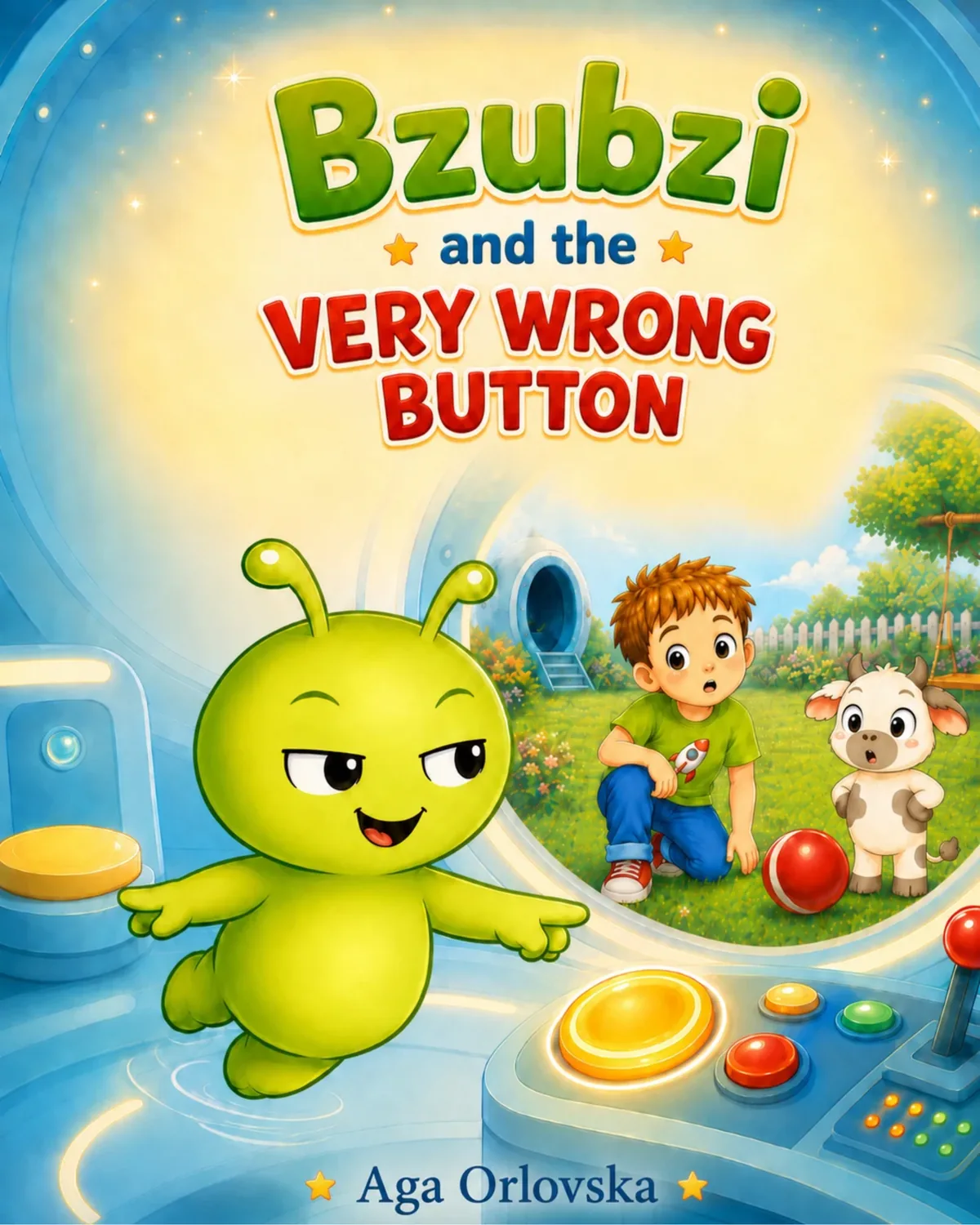
Bzubzi is alone aboard his spaceship when he notices a mysterious red button. He does not know what it does. He presses it anyway.
One unexpected blackout and an unplanned journey later, Bzubzi arrives on Earth, where he meets Tomek, Lola, and several things he is completely certain he understands.
Bzubzi and The Very Wrong Button is a complete, beautifully illustrated read-aloud for children ages 4–8. It takes approximately 10 minutes and can be printed at home or read on your device. Free, complete illustrated PDF.
Finally, a children’s book that genuinely made us laugh.
Katherine, mom of Caroline, age 6