Short answer: a child who says books are boring has usually not met the right story yet. Here is what helped in my home:
- Start with what already fascinates them: a subject, a kind of character, or simply something funny.
- Offer many kinds of stories and notice which ones they ask for again.
- Let comics and being read to count as reading.
- When something works, give them more of it before you ask for variety.
I was the child who thought books were boring
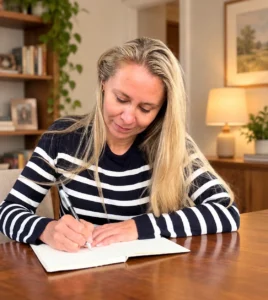
I did not love books as a child. Now I am a writer, and that experience shaped how I helped my own children find stories they genuinely enjoyed.
If you had met me as a child, you probably would not have guessed that I would become a writer. I did not like reading. I knew books were supposed to be important. I knew adults wanted me to read them. But knowing that something is good for you does not make it interesting.
I did not really begin reading for pleasure until I was a teenager. That was when I discovered crime stories and mysteries, books I genuinely wanted to finish because I needed to know what had happened. Nobody had finally persuaded me that reading was valuable. I had simply found stories that were valuable to me.
From there, I moved on to biographies, novels, and many other kinds of books. Today, I read a tremendous amount, books are a natural part of our home, and I am a writer myself. I did not dislike reading after all. I just had not found my stories yet.
That experience stayed with me when I became a mother. I wanted my children to love books, but I knew that telling them how important reading was would not be enough. I had already heard that argument myself. Instead, I tried to understand what made them listen, laugh, ask questions, and request another story. These are the things I learned.
1. “Books are boring” is not a final verdict
When a child says books are boring, it is tempting to correct them. But they may be telling the truth about the books they have encountered so far.
They may not enjoy slow stories, realistic stories, gentle stories, or books selected because an adult believed they contained an important lesson. That does not mean they will never enjoy reading. Books are not one thing. A child can be bored by five books in a row and completely absorbed by the sixth.
The important question is not, “How do I convince my child to like books?” It is, “What kind of story have they not met yet?”
2. Begin with what already fascinates them
With my children, I tried to pay attention to whatever occupied their minds at that particular moment.
Sometimes it was a subject: animals, space, mysteries, or something they had discovered that week. Sometimes it was a type of character. Sometimes they wanted adventure. Sometimes they simply wanted something that would make them laugh.
Their interests did not always match the books an adult might have chosen for them. That was fine. A child who will not listen to a carefully selected, highly recommended story may happily spend half an hour with a book about an absurd alien, a suspicious animal, or a mystery involving a missing sandwich.
Interest is already an open door. We do not need to make the child walk through a different one.
3. Offer many kinds of stories and watch what happens
When my children were little, I read them many different books. I was not trying to discover the one perfect book. I was learning their tastes. These are the questions I kept in mind:
- Which characters did they remember the next day?
- When did they interrupt because they had something to say?
- Which pages did they want to see again?
- What made them laugh?
- What did they ask me to read one more time?
Children often show us what they enjoy long before they can explain it. Once I recognized the subjects, characters, and kinds of humor each of my children responded to, choosing the next story became much easier. I stopped asking only, “Is this a good book?” I began asking, “Is this a good book for this child?”
4. A book does not always need to teach something
Parents are often encouraged to look for books that are educational, meaningful, emotionally valuable, or built around a lesson. There is nothing wrong with those books. But not every story needs a job.
A book can simply be funny. It can be strange, surprising, adventurous, or delightfully ridiculous. It can give a parent and child ten enjoyable minutes together. It can create a joke they repeat the next day. That is valuable too.
Stories give us a shared world. We can talk about what happened, disagree with the character’s decisions, imagine what might happen next, or simply laugh together.
The pleasure of reading is not an extra benefit that comes after the important part. Very often, it is the important part.
5. Comics count
For some children, the story that opens the door will be a comic book or graphic novel. That is not a lesser beginning.
Pictures help carry the action. Short pieces of dialogue make the pages move quickly. Children can understand expressions, notice details, and follow parts of the story even when they do not feel confident reading every word.
If a child is absorbed in a comic, they are following a narrative, getting to know characters, making predictions, and turning pages because they want to know what happens. That is a relationship with books worth protecting.
The first goal is not to guide them toward the kind of reading that looks most impressive to adults. It is to help them discover that books can contain something they want.
6. Being read to counts too
A child does not have to read every word independently to develop a love of stories.
Reading aloud allows children to enjoy books that may still be difficult for them to read alone. They can experience the humor, suspense, characters, and rhythm without struggling through every sentence. It also makes reading something we share rather than something they must perform.
Some of our best conversations began with books. Sometimes we talked about the story. Sometimes one strange detail led us somewhere completely different. And sometimes we did not discuss anything important at all. We simply laughed and continued with our evening. All of that counts.
7. When something works, give them more of it
Adults sometimes feel they should encourage variety immediately. But when a child finally finds a character, subject, or kind of story they love, I think it is worth staying there for a while:
- Let them read another mystery.
- Find more stories about space.
- Return to the same character.
- Read the favorite book again, even if everyone in the house already knows every page.
Enjoyment builds trust. Once a child discovers that books can reliably give them something they like, trying a different story becomes much less of a risk.
Their interests will expand. Mine certainly did. I began with crime stories and eventually found biographies, novels, and many other books I would never have chosen before I became a reader. But first, I needed a reason to begin.
Help them find their stories
I cannot promise that one book will transform a child into a reader. I do not think any honest author can. But I do believe that a child who says books are boring may simply be waiting for a story that feels as though it was written for them.
Our role is not to convince them that they are wrong. It is to keep looking with them.
That is also how Bzubzi began. When my son was fascinated by space and constantly asked me for new stories, I did not write him a book designed to teach him facts about planets. I wrote about a funny, friendly alien who was curious about everything and confused by almost everything.
My son wanted to hear it again. Then he wanted to know what Bzubzi did next. Sometimes that is where loving books begins: not with the story we think a child should want, but with the one they ask us to continue.
Perhaps Bzubzi is one of their stories
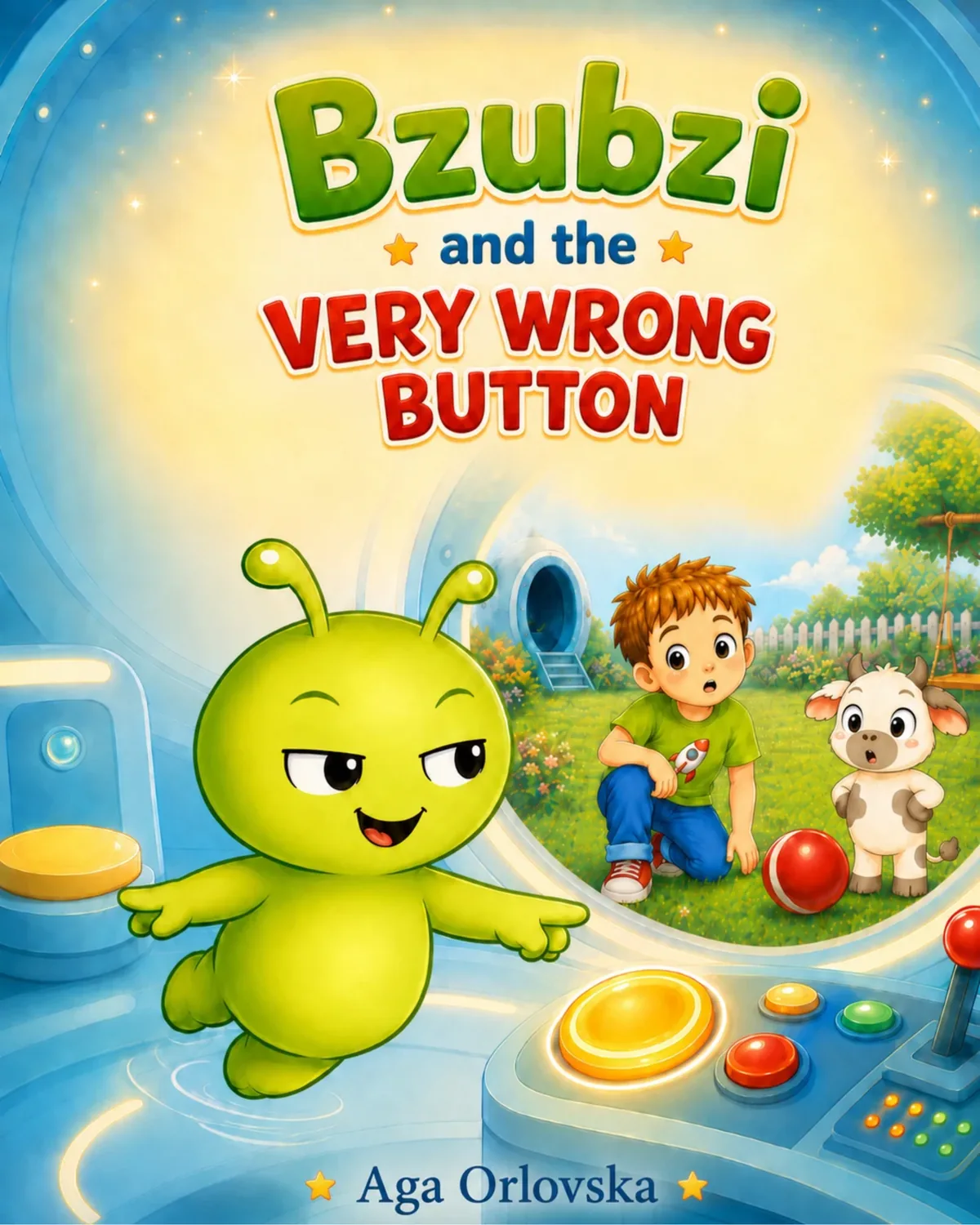
Bzubzi is alone aboard his spaceship when he notices a mysterious red button. He does not know what it does. He presses it anyway.
One unexpected blackout and an unplanned journey later, Bzubzi arrives on Earth, where he meets Tomek, Lola, and several things he is completely certain he understands.
Bzubzi and The Very Wrong Button is a complete, beautifully illustrated story for children ages 4–8. It takes approximately 10 minutes to read aloud and can be printed at home or read on your device. Free, complete illustrated PDF.
Finally, a children’s book that genuinely made us laugh.
Katherine, mom of Caroline, age 6